The world is lit by lightning!
A long ramble about memories, avoidance, plays, movies, and—uh—ghosts.
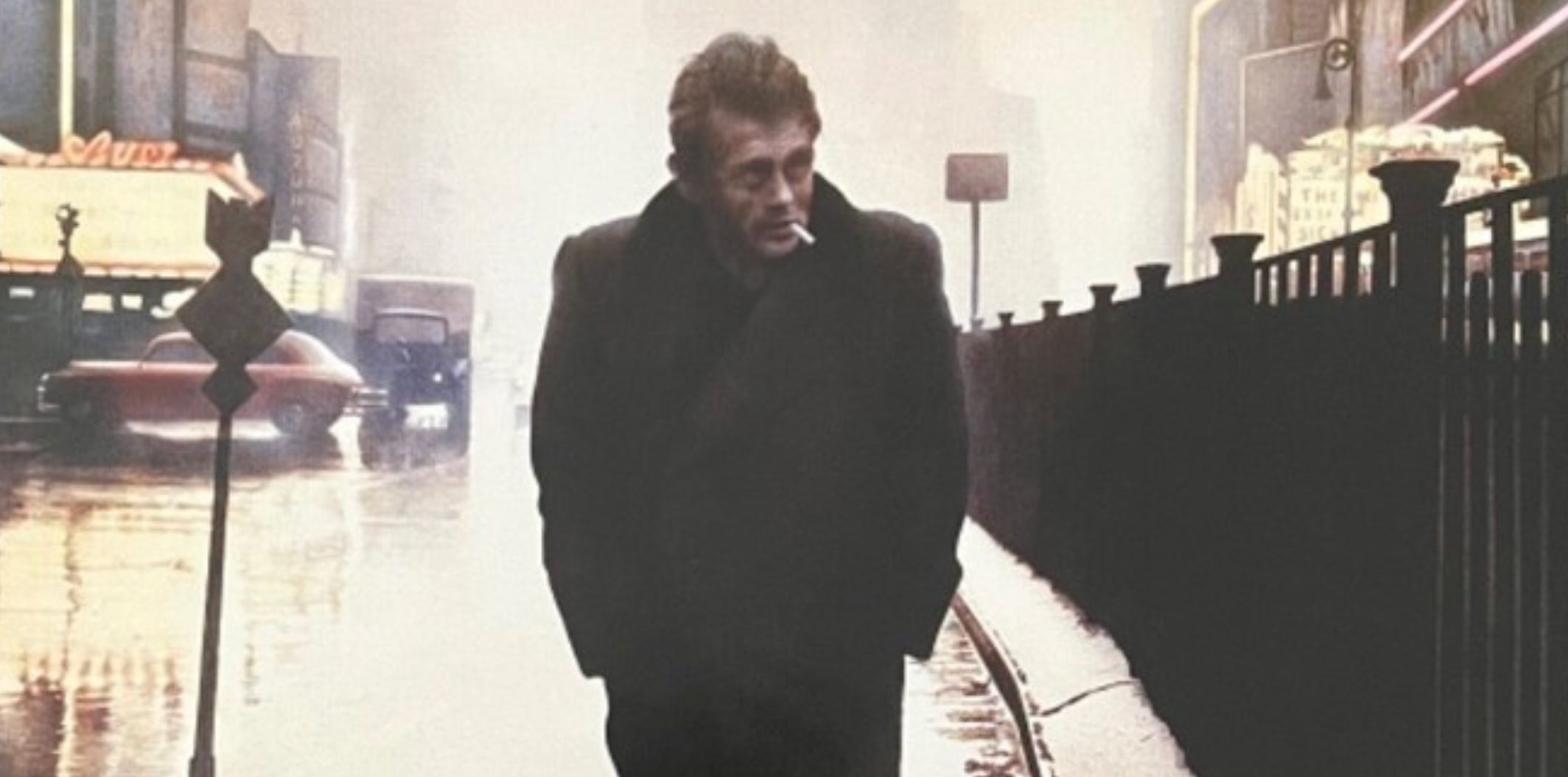
It was raining, and it wasn’t supposed to rain, so she was wearing a white dress, and we were hiding under an awning on Cornelia Street in the West Village and we were wet because we’d run for shelter, but we had not run fast enough and we were laughing and waiting for the storm to pass and we had only been dating for a few weeks, but I looked at her face—wet with rain—and her smile—glistening with rain—and I felt this thing I had never felt before; happiness, yes, but more—this indescribable more—and I thought, “oh god, Ben, you’re feeling that thing that people feel in the songs and the books and the films and the sonnets,” and I was, and it was the first time that I had, and I said to her, “I love you,” and there was a silence, and it went on forever, or it might as well have been forever because it felt like forever and I thought, “oh jesus, how are you going to handle this coming rejection? You didn’t think this through, dumdum! You can act like it’s no big deal and smile, but are you going to stay under this awning until the storm passes? Because it could be a while, and that would be incredibly awkward, but walking off alone into the rain is worrisome behavior, though James Dean did walk alone in the rain in that one famous photograph, although you’re not James Dean, and he probably never had this problem, but he did die in a car accident so he didn’t have a perfect life, Ben, Ben, Ben, BEN, the milliseconds are passing and she is going to speak soon,” and then she did, and she said, “I love you too,” and I caught my breath and I smiled, and she caught her breath and she smiled, and James Dean was dead and we smiled, and we kissed under the awning on Cornelia Street in the rain.
First time I’d ever felt that, first time I’d ever said that, first time it had ever been said to me.
And then a few months later, we broke up down the street, having mutually discovered that not only did we not love each other, we actually didn’t like each other very much..
We ran into each other a few times over the next decade, but neither of us longed for the other one. Maybe we were in love under that awning, maybe we weren’t and only thought we were, but we both agreed that we weren’t in love when the rain stopped.
This is a break-up that involved no regret, no “what could have been,” which is to say it was the best sort of break-up imaginable; one that you just move on from.
And yet, for years, I avoided that block of Cornelia Street.
When I do go down it, I remember that rainy moment, and I remember a feeling I have only felt a few times in my life, for better or worse, and I remember being younger, and I remember youthful passion, and I remember a zillion things completely unrelated to the relationship itself. And those memories don’t make me fall to my knees but they are uncomfortable and so for a long time, I walked the long way around.
Memories are what haunt us
This is not a top-tier memory. It is not significant in any real way. It is not something I think about intentionally, and it’s not one I’ll dwell on just because my mind is wandering. But it’s in the scrapbook. Importantly, I remember not only the details of the memory but how I felt during it. Over the years, you will change how you feel about rain and white dresses and the West Village, but you will still understand that a good feeling is good. Memories of feelings have staying power. But since it’s not a Class A memory, the only way it can get my attention is if I leave a window open or a door unlocked. The open window is the awning on Cornelia Street. The unlocked door is that particular stretch of sidewalk.
Everyone who has ever lived has experienced this. If you lived in fields, you experienced it. If you eventually live on the Moon, you’ll experience it. It’s what it means to be haunted. There are no ghosts or spirits that slip loose from the afterlife. We are haunted by our memories, and our memories are triggered by, well, could be anything.
You live in a small town in bumfuck wherever, and you spend your life there, and you turn left on Main Street and right on First Street and left again and right again, and that’s the house you lost your virginity in. The local church? The one you drive by 14 times a week? That’s the place you said goodbye to all of the loved ones you’ve ever lost.
You become inured to it in a small town. If you drive by the church where your father had his funeral every single day, you stop thinking about dear old dad and the things you never got a chance to say while he was alive. This is a cruel form of exposure therapy that eventually dulls the sharp edges of the pain. But in a big city like New York, the ghosts are rarer, and because the avoidance is easier, when they finally appear, the surprise is greater.
You don’t walk down that street every day. You don’t see that corner every week. But you are always only one rainstorm away from turning left and being hit with these intrusive thoughts you’re not on guard for.
That’s what they’re called: intrusive thoughts. Thoughts that take you away. Thoughts that don’t ask for consent. Thoughts that, as the name suggests, intrude. And then they’re the thoughts that came to dinner—and wouldn’t leave. Stuck around and couldn’t take a hint.
They’re not always memories. They’re often the consequences that happen after the memory: The regret, the self-loathing. “I fucked that up, and I fucked this up, and I’m no good, dammit.”
People mostly talk about intrusive thoughts when they’re upsetting, but that’s only because people don’t complain about the good versions. And there are good versions. They’re unexpected thoughts that put a smile on your face and take you away to somewhere good and pure, where pop music plays all the time.
Cities are filled with both good ghosts and bad ghosts.
They aren’t just thousands upon thousands of sidewalks lousy with emotional landmines. They’re also sidewalks lousy with good associations! You’re only ever one missed subway stop away from a very nice ghost; a place that reminds you of something wonderful, uncomplicated, and devout. “Oh that’s the hot dog stand where I had a very good hot dog and met up with my friend Gary, and then Gary and I went to see Crimson Tide. What a great film that is!” And then you get to bathe in the warm delight of thinking fondly about Crimson Tide and hot dogs and Gary’s friendship.
I’m not talking about great memories, OK? I’m talking about good ones. Great memories you don’t need an excuse to think about. You will think about the birth of your children just because. You’ll think of your wedding night just because. But the other ones need triggers. And the fact about cities is they are rife with triggers.
This, too, happens in small towns, but it happens less for the same reasons why the bad versions happen less.
Living in a small town letterboxes your trips down memory lane. It takes out the highs and the lows.
People are willing to move because of these ghosts. You’re willing to move to get back to the good ones, but you’re also willing to flee the bad ones. If you are tormented, you’ll run. You’ll pick up your stakes and head for the horizon. You’ll join the merchant marines to escape the memories and regrets lurking around the way.
But this never works. Never has, never will. Because geography can trigger things but it’s not the only thing that can do that. Even third-tier ghosts will find a way. You can lock the awning window or the Cornelia Street door, but eventually, they’re coming in through the white dress mail slot. There is something gurgling and burbling inside of you.
One of the most famous monologues in drama is about this. At the end of The Glass Menagerie, Tom addresses the audience:
I didn’t go to the moon. I went much further, for time is the greatest distance between two places. I left St Louis. I descended the steps of this fire escape for the last time and followed from then on in my father’s footsteps, attempting to find in motion that which was lost in space. I traveled around a great deal. The cities swept about me like dead leaves, leaves that were brightly colored but torn away from their branches.
I would have stopped but I was pursued by something, it always came upon me unawares and took me altogether by surprise.
Perhaps it was a familiar bit of music. Perhaps it was a piece of transparent glass. Perhaps I’m walking along a street in some strange city before I have found companions. I pass the lighted window of a shop where perfume is sold. In the window are dozens of tiny bottles, pieces of transparent glass in delicate colors, like bits of a shattered rainbow.
And all of a sudden [the thought of] my sister grabs at my shoulder.
You may be done with Laura, Tom, but Laura ain’t done with you.
I started this off with a minor memory of mine for the exact reason that doing a big one is almost cheating. I have big memories, too. But the gravity of those memories is immense and unique to the individual. Tom, in the play, is talking about things so traumatic to him that he fled his family! He abandoned his younger sister! He lives an itinerant life wrought with guilt! Of course, a glass menagerie reminds him of his sister’s glass menagerie. Of course.
Those memories—those ghosts—are in God Mode. They’ll find you and haunt you no matter what you do. To escape them, you need to disappear into a plume of opium and, according to the best interpretations of the movie Once Upon In America, even that might not save you.
The point is that both those Major League ghosts and the Single-A ghosts are playing the same game. The former is just better at it than the latter.
Here’s the next bit of Tom’s speech after the thought of his sister has taken him by surprise:
“All of a sudden my sister grabs at my shoulder. I turn around and look into her eyes. ‘Oh, Laura! How I have tried to leave you behind me. But I am more faithful to you than I ever intended to be.’
I reach for a cigarette, I cross the street, I run into the movies or a bar, I buy a drink, I speak to the nearest stranger: anything that can blow your candles out. For nowadays the world is lit by lighting!”
Talking to strangers, going to the movies, getting drunk: these are very good ways to temporarily take your mind off something.
They’re coping strategies. But coping strategies come in two flavors: good ones and bad ones. The good ones are where you recognize the problem and then try to diminish the negative outcomes of the stressor. The bad ones are pure acts of avoidance. If you’re just avoiding all of your problems in some benighted act of denial, then they’re just going to keep coming at you until they get progressively worse and, eventually, they consume you. What Tom is doing is never going to blow Laura’s candles out. It’s just going to tip them over, start a fire, and cause him to burn to death.
Tom leaving St. Louis and me avoiding Cornelia Street are both examples of trying to avoid confrontation with the ghosts altogether. Batten down the hatches! Lock the doors! Shut the windows! Board everything up! Keep these motherfuckers out!
And that’s what they try first in Straw Dogs as well. Dustin Hoffman and his wife, tormented by local thugs, initially attempt to avoid confrontation. He is baited and avoids it repeatedly until a failed attempt at self-assertion forces him and his wife to barricade themselves in their cottage. But avoidance is futile; the thugs eventually breach their defenses, forcing Hoffman to confront them violently.
Avoiding things is bad
Confronting bad things is what a lot of therapy is about. An extreme example is exposure therapy: you are afraid of snakes so I will make you look at photos of snakes. But even traditional psychoanalysis is about confrontation. You confront your childhood, you confront your repressed thoughts, you confront your fears. You go on a structured journey into your pain, into your past, proactively seeking out the baddies. You head into town, call the malady out, and say, “you got 24 hours to get out of town or else you and I are going to duel.”
Even exploratory talk therapy, which involves going spelunking through your mind and discussing what you find, is still about confronting the bad things. It’s just a more roundabout way of surfacing them.
But all three of those involve some level of proactive hunting.
There is another therapy, though, called Cognitive Behavioral Therapy.
CBT doesn’t ask you to seek out the limey hicks. But it has seen Straw Dogs and it knows they’re coming. And more importantly, it knows that eventually, they’re going to get in the cottage. It is about what to do when they break down the door.
CBT is about developing healthy coping strategies and improving your own emotional regulation. It’s about not letting the ghosts get to you. It’s about how to defang intrusive thoughts. It’s about teaching Dustin Hoffman how to use a gun.
What all of these stories—mine on Cornelia Street, Tom in St. Louis, Dustin Hoffman in that cottage—have in common is avoidance. Avoidance always feels sane, civilized, responsible. And it always backfires. Because when you wall things off, you don’t resolve them — you strengthen them. Avoidance is gasoline for ghosts.
Unhealthy avoidance coping is something that we all do every day. It’s ok to do it a little. You’d never get anything done if you didn’t. It’s bad when it is pathological and chronic and forever. But if you are in a meeting with your boss and they happen to be wearing a tie that reminds you of the tie your friend hanged himself with and how he had called you earlier that night but you hadn’t answered because you were on a date, you should try to shake that thought loose and continue on with the meeting.
Modernity has made this much easier. (“The world is lit by lightning!”) Tom could go to the movies, but we can turn on Paramount+ or open TikTok or do 50 million things that make boredom today completely different than boredom in the past. There are an endless number of ways to distract yourself from yourself in 2025.
But you can do it too much. A lot of people do it too much.
One of the most addictive methods is social media. Tom talked to strangers to escape his thoughts and so do we but we do it at scale.
Like a city, social media is filled with surprises. One of its great joys is that it will trigger random good memories or good thoughts that you would never think about by yourself. Every day Twitter reminds me of a ghost so lazy that it never would have gotten in my mind had it not been for some specific bizarre and unpredictable reason. Why? Because social media is humans and humans are specific, bizarre, and unpredictable. And the downside is there are also things that I see that lead to bad hauntings. Ghosts aren’t only geographic anymore—they’re algorithmic. You have to deal with that. You have to be able to suffer through the occasional bad thought.
You can go to a walled garden like BlueSky or TRUTH (lol). That’s the equivalent of going to a small town, I guess. You can create block lists and black out the sun. But eventually, they’re going to find a way in and what do you do then?
The folly of trigger warnings
Trigger warnings are one of the clearest examples of how avoidance gets moralized. They began as a shorthand on feminist blogs for posts about sexual assault and then metastasized into warnings for anything upsetting, then anything uncomfortable, then anything someone might simply dislike. Jill Filipovic had a great piece a few years ago tracing this drift. A Cornell clinician told her he’d watched a decade-long shift in how students described their problems: ordinary discomfort inflated into trauma language, unfamiliarity reframed as harm. The kids weren’t doing any better; the vocabulary was just getting heavier.
Underlying it was a new assumption: that encountering disturbing information is dangerous, not merely unpleasant. If it might hurt you, the institution owes you a preemptive cushion. So the warnings multiplied, the definitions blurred, and the culture quietly reorganized itself around protecting people from feelings they hadn’t even had yet.
Meanwhile, the actual world they inhabit is the opposite of cushioned. The internet is a haunted house! Filled with triggers that delight and triggers that make you spiral. It’s relentless and terrible and wonderful. And instead of building tolerance, we spent ten years telling young people that the mere presence of a difficult thought is an emergency. It’s no wonder they fall apart.
If we really wanted to prepare the youth for the lives they will have, we wouldn’t be giving them delusional safe spaces that will never be watertight. We’d have them take a class where they have to stand in front of a braying mob calling them terrible names. You pass if you don’t “get mad,” and if you do get mad, you have to take it again and the mob will shout at you about how mad you are.
Because avoidance always promises safety, and always delivers fragility. You can dodge the book, dodge the idea, dodge the street, dodge the memory — but every dodge makes the eventual encounter sharper, not softer.
You can curate your feed. You can avoid Cornelia Street and girls in white dresses. You can beg the teacher for a warning label. You can leave St. Louis and let cities sweep about you like dead leaves. But, eventually, Laura is going to touch your shoulder and you’re going to have to look into her eyes.
(And honestly, it’s probably not going to be as bad as you’ve spent ten years imagining)


Two moving substacks in a row from B.D. Not what I expected when I signed up. Good advice, also.
"We’d have them take a class where they have to stand in front of a braying mob calling them terrible names. You pass if you don’t “get mad,” and if you do get mad, you have to take it again and the mob will shout at you about how mad you are." Weirdly, this is basically how a friend described what Scientology did to her when she briefly fell into it back in the 1970s. (Also, I feel very called out, yet I will keep up with my avoidance for a while yet. My old therapist is shaking her head somewhere in disappointment.)