

A rule of life is that before reviewing a film, you have to see it. This does not by itself mean you cannot criticize a film you haven’t seen at all, but it does limit the type of criticisms you can make. Specifically, you are limited to explaining why you chose not to see it. “This looks dumb”—and then you explain why. “This looks bad”—and then you explain why. “This looks like not my cup of tea”—and, well, you get the picture. This is an incredibly weak position to be in. All anyone needs to do to beat you in a disagreement is to have seen the movie. But it’s also an important filter mechanism, since there are only so many hours in the day and no one wants to see stuff they’re confident they won’t like.
A corollary rule is that unseen criticisms require a confident belief in a critical flaw in the film. You are not going to see this movie. That means your negative prediction is built on a load-bearing element. You are definitionally not allowed to criticize a movie you have no intention of seeing for minute creative choices and details. You can say “I am not going to see D2: THE MIGHTY DUCKS because my favorite thing about the first MIGHTY DUCKS was that it was set in Minneapolis and this one isn’t.” But you can’t say “I am not going to see D2: THE MIGHTY DUCKS because Coach Bombay would never call a power play against the Icelandic youth team.” Maybe he would! You haven’t seen the film! Maybe the movie earns the decision! Maybe the context you chose not to experience made it work.
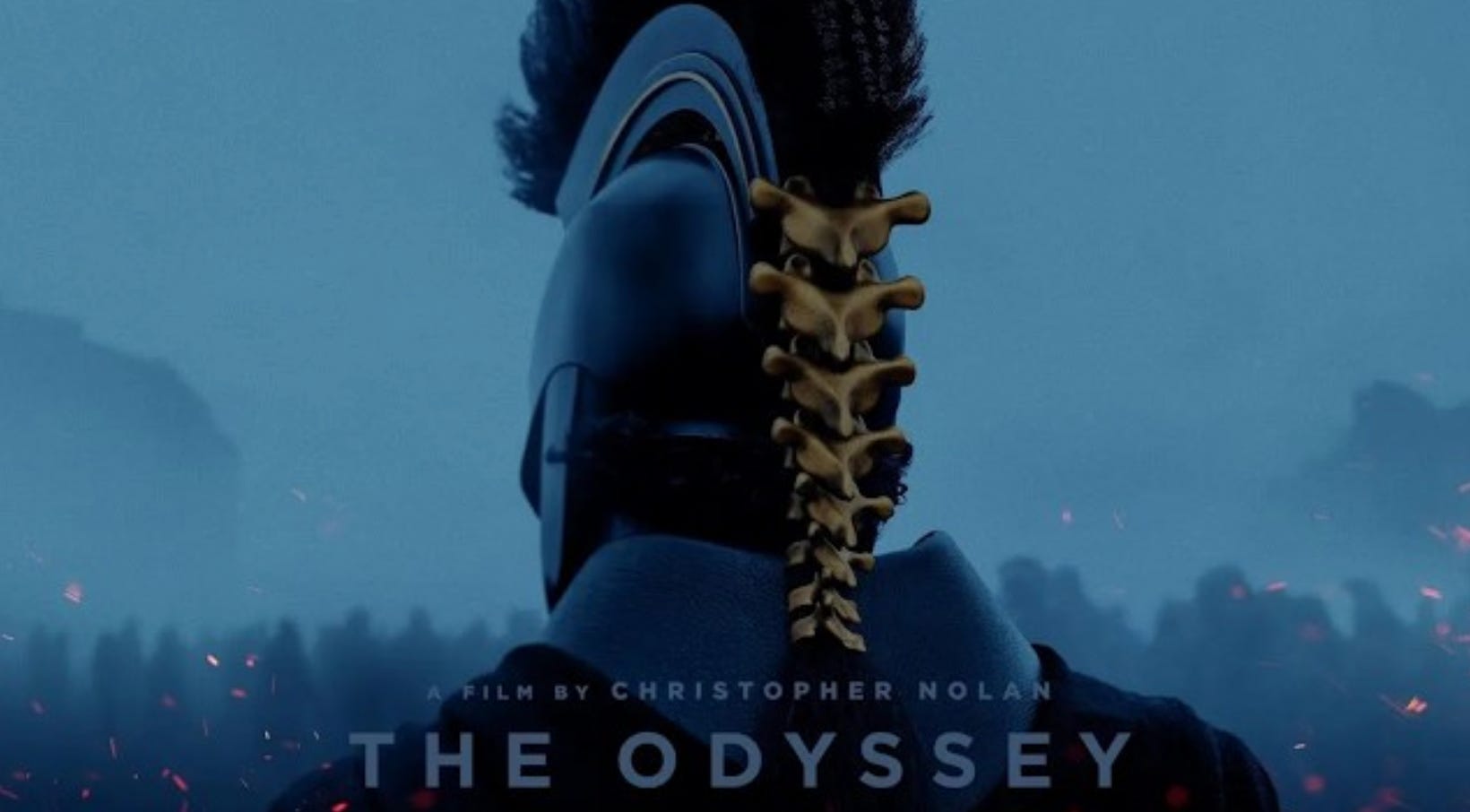
This is not an essay about THE MIGHTY DUCKS. As you may suspect, it’s about a work of almost equal stature: Christopher Nolan’s THE ODYSSEY. The highly anticipated blockbuster epic has increasingly come under fire from certain right-wing culture warrior types on social media because of a minor character’s casting. Already, we can dismiss these complaints, because they are violations of both of our rules. They are premature reviews by people who are actually going to see the movie, and their grievances are not central to the film itself. The court does not need to reach the merits here because the complainants do not have standing. Nevertheless, we will persist.
The specific complaint is that Helen of Troy is being played by Lupita Nyong’o. Why is that a problem? She’s a beautiful Academy Award winner. Well, you see, she is black and Helen of Troy is not. Helen of Troy doesn’t exist at all and is a fictional person—the child of Zeus disguised as a swan—so while it is true she is not black, it is also true she isn’t white. She isn’t real. She is pretend. And Homer was blind so it’s not like he was an authority on colors. Still, in the Iliad and Odyssey, she is the Queen of Sparta who runs off with a Trojan prince and sets off the Trojan War. Ancient Sparta is in Greece, and people in that part of the world were, for the most part, Caucasian. In all the previous cinematic renditions of these fables, she’s been played by various white actresses, which is how we arrive at “Helen of Troy is white.”
We will pause to observe that while ancient Greeks might have considered Helen of Troy to be white, a majority of Americans for most of American history would not have—we did not consider people from Southern Europe white until a couple of generations ago.
What they would have thought, even in 1923, was that she was beautiful, because that is her thing. Helen of Troy is the most beautiful woman in the world. Her defining characteristic is her spellbinding beauty, the sort of thing that topples empires and makes blowing up not only your own life but the lives of your loved ones feel worth doing. So in 1923 America, she might not have been White to most Americans, but when they closed their eyes and imagined her, she looked damn close. Not because American men of the past—at their most white supremacist—weren’t attracted to non-white women. They obviously were, and subjected them to the flesh trade because of it. But they might not have called it “beauty,” and they definitely weren’t bringing them home for dinner with dad.1
And this is basically what the objections are: a lot of people are mad because Christopher Nolan has told them that “the most beautiful woman in the world” can be black. He has done a reverse A TIME TO KILL.
These dudes clicked on a fantasy that said “most beautiful woman in the world,” and when the video started playing, they were caught doing the white man blinking gif with their pants down.

But these guys—the Jerkoff Whites—are only one component of the coalition losing their minds about it.
